
 Online safety ParentsTogether Action
Parental Advisory: Report Finds Apple Profiting from Child Sexual Abuse Images on iCloud, Putting Children at Risk
The online proliferation of child sexual abuse material continues to put children at risk, and a recent report shows one of the world’s largest and wealthiest tech companies is not only failing to stop it – they are profiting from it. A new report from Heat Initiative estimates that Apple has made hundreds of millions of dollars from CSAM stored on iCloud in just a few of the countries where they operate. This research comes following parent concerns that Apple made fewer than 300 reports of child sexual abuse to the National Center for Missing and Exploited Children (NCMEC) in 2025, while Google, Meta, Amazon, and TikTok each made more than 1 million reports. The low reporting is a troubling signal that Apple, who controls more than half of the U.S. smartphone market, isn’t removing illegal images of child sexual abuse.
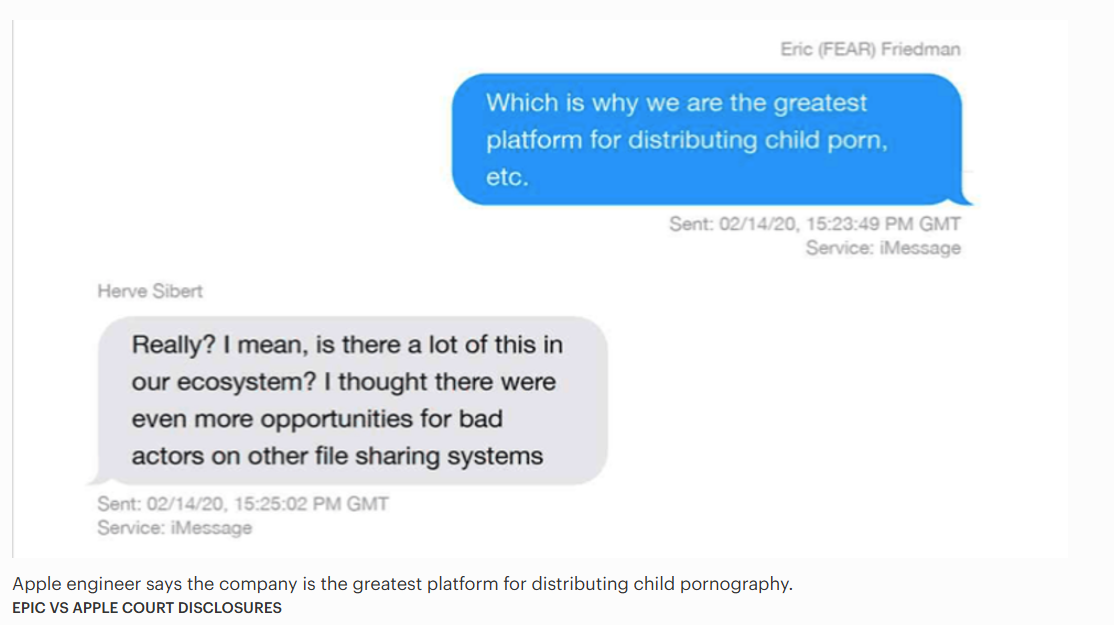
What The Report Found
Heat Initiative conducted an analysis of Apple's financial incentive to allow customers to host child sexual abuse material on iCloud without threat of detection or removal. Based on publicly available data, Heat Initiative estimates that Apple has earned approximately $150 million in revenue from customers who store CSAM on iCloud in the US, UK, and Australia alone over the past 5 years.
A concrete example: A 50-year-old former police officer was arrested on July 6, 2023 and charged with 50 counts of promoting a sexual performance by a child and 69 counts of possessing a sexual performance by a child. After receiving a tip that the man had uploaded CSAM to his iCloud account, law enforcement executed a search warrant and discovered images and videos of CSAM of children between the ages of 4 and 12 in his iCloud account and on his mobile phone.
This is not an isolated incident. The research identified dozens of similar cases, many involving large collections of abuse images stored on iCloud accounts.
Why This Matters
The impact on survivors is severe and long-lasting. RAINN reports survivors experience chronic anxiety, depression, or PTSD, trust and relationship issues, body image struggles and disordered eating as a result of knowing their content continues to circulate. Additionally, 70% of CSAM survivors worry about being recognized from child sexual abuse imagery and 85% anticipate needing ongoing therapy to address the abuse perpetrated against them.
Beyond survivors, an anonymous survey of CSAM viewers on the dark web found 42% of the respondents reported that they had sought direct contact with children through online platforms after viewing CSAM. Research also shows that 1 in 5 teens have been sextortion targets, and perpetrators are increasingly using CSAM to lure, trick, or coerce sextortion victims.
There is currently almost no consequence for Apple's failure to detect and report CSAM, yet the platform reaches hundreds of millions of children and families worldwide through iCloud.
What Parents Can Do
Parents should:
- Speak with your children about online safety. Talk to kids about the risks of sharing images and interacting with strangers online.
- Consider alternative cloud storage. If privacy and safety are concerns, research cloud storage providers with stronger CSAM detection policies.
Contact Apple directly. Demand that Apple implement the recommendations in the report:
- Conduct an independent investigation into CSAM stored on iCloud and transparently share the results with the public.
- Acknowledge the problem and commit to finding a solution—not simply allowing CSAM to thrive while profiting from it.
- Work with child safety and privacy advocates to develop solutions that stop the spread of CSAM on iCloud and other Apple ecosystem products while preserving user privacy.
Parents, advocates, and policymakers should demand that Apple—one of the wealthiest technology companies in the world—invest its considerable resources into protecting children, not enabling their exploitation.